New Construction vs. Existing Homes in Metro Detroit: Which Is the Smarter Move?
By Holly Amato, REALTOR® | eXp Realty | Metro Detroit, Michigan
THE NEXT HOME DECISION: BUILD NEW OR BUY ESTABLISHED?
When you're ready to move into your next home, one of the biggest decisions isn't necessarily where to live. It's whether to purchase a newly constructed home or an existing property.
Throughout Metro Detroit, buyers are comparing beautiful new developments with established neighborhoods offering mature landscaping, larger lots, distinctive architecture, and convenient locations.
And for homeowners who have spent years building equity, the decision is about much more than price per square foot. It's about how you want to live.
Both options offer advantages. But understanding the full financial picture, lifestyle differences, and potential surprises can help you make a much smarter investment.
1. THE APPEAL OF NEW CONSTRUCTION: EVERYTHING IS YOURS FROM DAY ONE
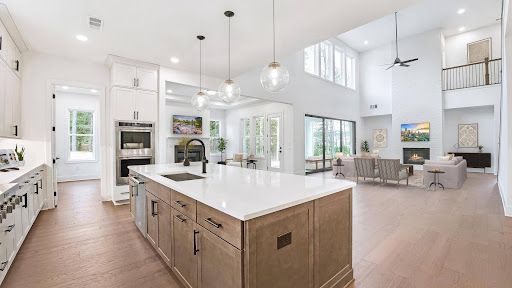
There's something exciting about walking into a home where you're the first person to live.
New construction offers buyers the opportunity to enjoy modern floor plans, current design trends, energy-efficient features, and newer mechanical systems.
Depending on the builder and stage of construction, you may also have the ability to personalize your home with specific finishes, flooring, cabinetry, countertops, and other design selections.
For move-up buyers, this can be especially appealing. Perhaps you have spent years renovating and updating your current home. The idea of moving into something that does not immediately require another project may sound wonderful.
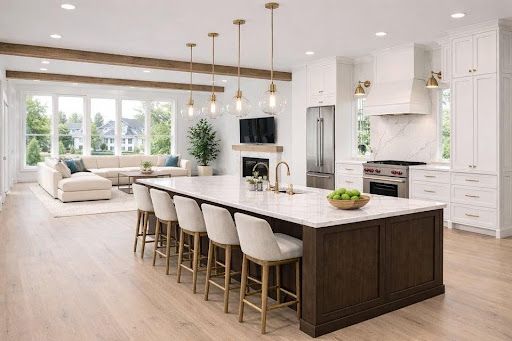
Today’s floor plans often reflect how people actually live, with open entertaining spaces, oversized kitchen islands, dedicated home offices, and thoughtfully designed primary suites.
However, new does not automatically mean better. Construction quality, included finishes, neighborhood design, and the builder’s reputation all deserve careful evaluation.
2. THE ADVANTAGE OF EXISTING HOMES: LOCATION, CHARACTER, AND ESTABLISHED NEIGHBORHOODS

An existing home can offer something that new construction does not always provide: a setting that has already developed over time.
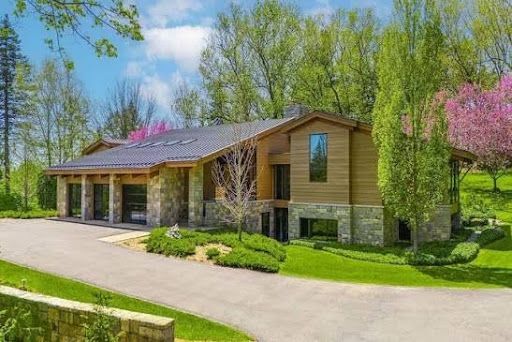
Mature trees, established landscaping, larger parcels, and neighborhoods with distinctive architecture can be difficult to duplicate.
In communities such as Rochester, Bloomfield Hills, Birmingham, and parts of Shelby Township and Washington Township, buyers may find properties with attractive locations and features that would be costly—or difficult—to recreate in a new development.
For some buyers, a beautifully renovated older home offers the best of both worlds: modern finishes combined with established surroundings.
Existing homes may also provide a clearer picture of the neighborhood, traffic patterns, nearby amenities, and overall community character.
Of course, these advantages should be balanced against the age and condition of major systems, including the roof, HVAC equipment, windows, plumbing, and electrical components.
The question is not simply whether the house is new. It is whether the property offers the features, location, and long-term value you are looking for.
3. BUILDER INCENTIVES CAN BE ATTRACTIVE, BUT UNDERSTAND THE DETAILS
One of the opportunities worth exploring with new construction is builder incentives.
Depending on the development, available inventory, and builder’s sales goals, buyers may encounter offers involving mortgage-rate buydowns, closing-cost assistance, design upgrades, or price adjustments.
These incentives can be valuable, particularly when purchasing a completed or nearly completed inventory home. But there is an important distinction between a generous incentive and the best overall financial deal.
For example, a builder might offer financing assistance through a preferred mortgage lender. Before accepting that offer, compare the entire loan package, including the interest rate, lender fees, loan terms, and total closing costs.
You should also understand whether an advertised mortgage-rate incentive is temporary or applies for the full loan term.
And remember: the advertised starting price of a newly constructed home may not reflect the price of the model home you are touring.
Cabinet upgrades, premium flooring, finished basements, fireplaces, upgraded lighting, and exterior enhancements can substantially affect the final cost.
A well-informed buyer evaluates the complete package—not just the incentive.
4. THE HIDDEN COSTS OF BUILDING A NEW HOME
This is where many buyers are surprised. When purchasing new construction, it is important to understand exactly what is included in the contract.
Depending on the builder and development, some features you expect may actually be additional expenses:
- Landscaping, sod, trees, and irrigation
- Patios, decks, and exterior entertaining areas
- Window treatments and upgraded light fixtures
- Appliances and additional electrical features
- Finished basements and upgraded flooring
- Premium lots or lot-related charges
- Fencing and other exterior improvements
A property that initially appears to fit comfortably within your budget can become significantly more expensive once all your desired finishes and features are included.
Custom construction may introduce additional considerations, including site preparation, utility connections, permits, architectural plans, and allowances that may not cover the final selections.
When we evaluate new construction together, I want you to understand exactly what is included, what is optional, and how each decision affects your total purchase price before you commit.
5. MICHIGAN PROPERTY TAXES: ONE OF THE MOST IMPORTANT DIFFERENCES
Property taxes are an essential part of the purchasing decision, particularly in Michigan.
Under Michigan’s Proposal A, taxable values on existing homes generally have limits on annual increases until certain events occur, including a qualifying transfer of ownership.
Following a qualifying transfer, the taxable value generally uncaps in the next calendar year. This means the taxes currently paid by an existing homeowner may not accurately represent what a new buyer will owe.
New construction introduces another consideration. A newly built property may initially have a tax assessment that does not yet reflect the value of the completed home.
Once construction is assessed, the taxable value can increase to account for those improvements.
For buyers comparing a new home with an existing property, it is critical to obtain realistic tax estimates based on the completed property and anticipated ownership.
The current tax bill alone should never determine your expected annual cost.
When I help clients compare properties, we look beyond the listing and identify the tax questions early so buyers can verify estimates with the local assessor and make informed decisions.
6. TIMELINE AND FLEXIBILITY: WHEN DO YOU NEED TO MOVE?
Purchasing an existing home generally offers a more predictable path to closing, assuming financing, inspections, title work, and other contract requirements proceed as planned.
New construction can involve a different timeline. If you are purchasing a completed inventory home, the process may be relatively straightforward.
But if you are building from the ground up, weather, material availability, labor scheduling, permitting, and construction changes may affect the completion date.
For homeowners who must sell their current property, timing becomes particularly important.
Will you sell first? Can you coordinate closings? Would temporary housing be necessary if construction is delayed? And what happens if your current home sells before the new property is ready?
These are not reasons to avoid new construction. They are reasons for us to establish a clear strategy before you commit.
7. LOT SIZE, PRIVACY, AND LONG-TERM LIFESTYLE

One detail that deserves more attention is the land itself.
Many buyers focus primarily on the house, but lot size, privacy, and outdoor living can have a significant impact on how much you enjoy a property.
Some newer developments offer beautifully designed homes with modern amenities but relatively compact lots.
Other developments feature larger parcels, wooded settings, or premium sites that provide greater separation between homes.
Established neighborhoods may offer mature landscaping and additional privacy, but they can also present limitations related to additions, renovations, or existing property conditions.
If your next chapter includes a pool, an outdoor kitchen, a detached garage, or simply more breathing room, evaluate the property beyond the four walls.
Also investigate deed restrictions, association rules, easements, and local zoning before assuming a desired improvement will be permitted.
The best home is one that fits both your current lifestyle and your plans for the future.
8. DO NOT SKIP INSPECTIONS JUST BECAUSE A HOME IS NEW
A common misconception is that newly constructed homes do not need independent inspections. They do.
Even quality builders can encounter construction defects, installation errors, or incomplete work.
Depending on the construction stage and contract, buyers may benefit from inspections before drywall installation, before closing, and near the end of applicable warranty periods.
It is also important to review the builder’s warranty carefully. Understand which components are covered, how long the coverage lasts, what is excluded, and how warranty issues must be reported.
For existing homes, a thorough inspection helps identify deferred maintenance and potential repair costs.
Regardless of the property’s age, professional due diligence is a smart investment.
9. WHY I RECOMMEND HAVING YOUR OWN REPRESENTATION WHEN BUYING NEW CONSTRUCTION
When you visit a model home, the sales representative generally represents the builder and its interests.
That does not mean the representative cannot be helpful or professional. But their role is different from having someone dedicated to advising you through the purchase.
When I represent buyers considering new construction, I help them compare nearby properties, review builder incentives, assess timelines and contract terms, and identify questions they may not know to ask.
In new construction transactions, it is especially important to understand deadlines, deposits, inspection opportunities, change orders, and any limitations contained in the builder’s contract.
Before visiting a new construction community, let’s connect. Some builders have registration requirements that can affect whether an outside buyer’s agent may participate. Getting me involved from the beginning helps us navigate those requirements and evaluate your options together.
We will also discuss representation agreements and compensation arrangements up front, so you understand how the relationship works.
Having knowledgeable representation can help you make decisions with a clearer understanding of both the opportunities and the risks.
10. WHICH OPTION IS BETTER FOR METRO DETROIT BUYERS IN 2026?
The answer depends on your priorities.
New construction may be the right choice if you value modern layouts, personalization, newer systems, and the ability to create a home around your lifestyle.
An existing home may be more attractive if you prioritize a specific neighborhood, mature landscaping, architectural character, lot size, or a more established setting.
For some buyers, a recently renovated property offers an appealing middle ground.
And for others, purchasing an older home in an exceptional location and making selective improvements may offer greater satisfaction than building from scratch.
The smartest purchase is not necessarily the newest, largest, or most expensive home. It is the one that balances location, quality, lifestyle, financial comfort, and long-term goals.
YOUR NEXT MOVE DESERVES A THOUGHTFUL STRATEGY
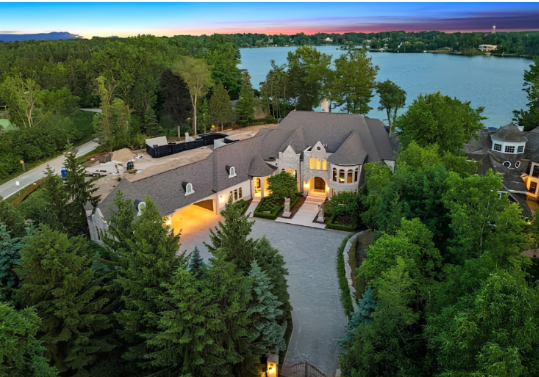
Whether you are considering new construction in Macomb County, an established luxury neighborhood in Oakland County, or a distinctive property elsewhere in Metro Detroit, understanding your options is the first step.
As an experienced Metro Detroit REALTOR®, I help buyers evaluate properties beyond their appearance, navigate negotiations, and make informed decisions about one of their most significant investments.
If you are considering a move, let’s explore what makes the most sense for your next chapter.
Because It’s More Than a Move.

Michigan REALTOR®
Serving Macomb, Oakland, Wayne, and surrounding Metro Detroit communities.
Share